How to Triage Show Buys Before You Submit to PSA
A same-day intake workflow for dealers who buy at shows. Sort keepers, raw stock, and PSA candidates before fees pile up.
Show floors reward speed. That’s also where submission piles get out of hand.
You buy a box, a binder run, or another dealer’s leftovers. Cards go in a tote. A week later, half of them are “probably worth grading,” and the other half should never have left the raw bin.
Triage is how you make that call before shipping and grading invoices show up.
The three piles (make them real)
Before you leave the hotel, or before the first day back in the shop, sort every show purchase into three piles:
- Submit candidates: cards you’d still send if the pre-grade looks solid
- Raw keepers: inventory you’ll list raw or hold. Not worth the slab chase
- Pass / break: damaged, overpaid, or not your lane
Write the piles down. A mental sort is gone by Monday.
Rule of thumb: If you wouldn’t pay the all-in submission cost again tomorrow for the same card, it’s not a submit candidate.
Same-day scan beats “I’ll grade later”
The best hour after a show usually isn’t listing. It’s getting those cards scanned.
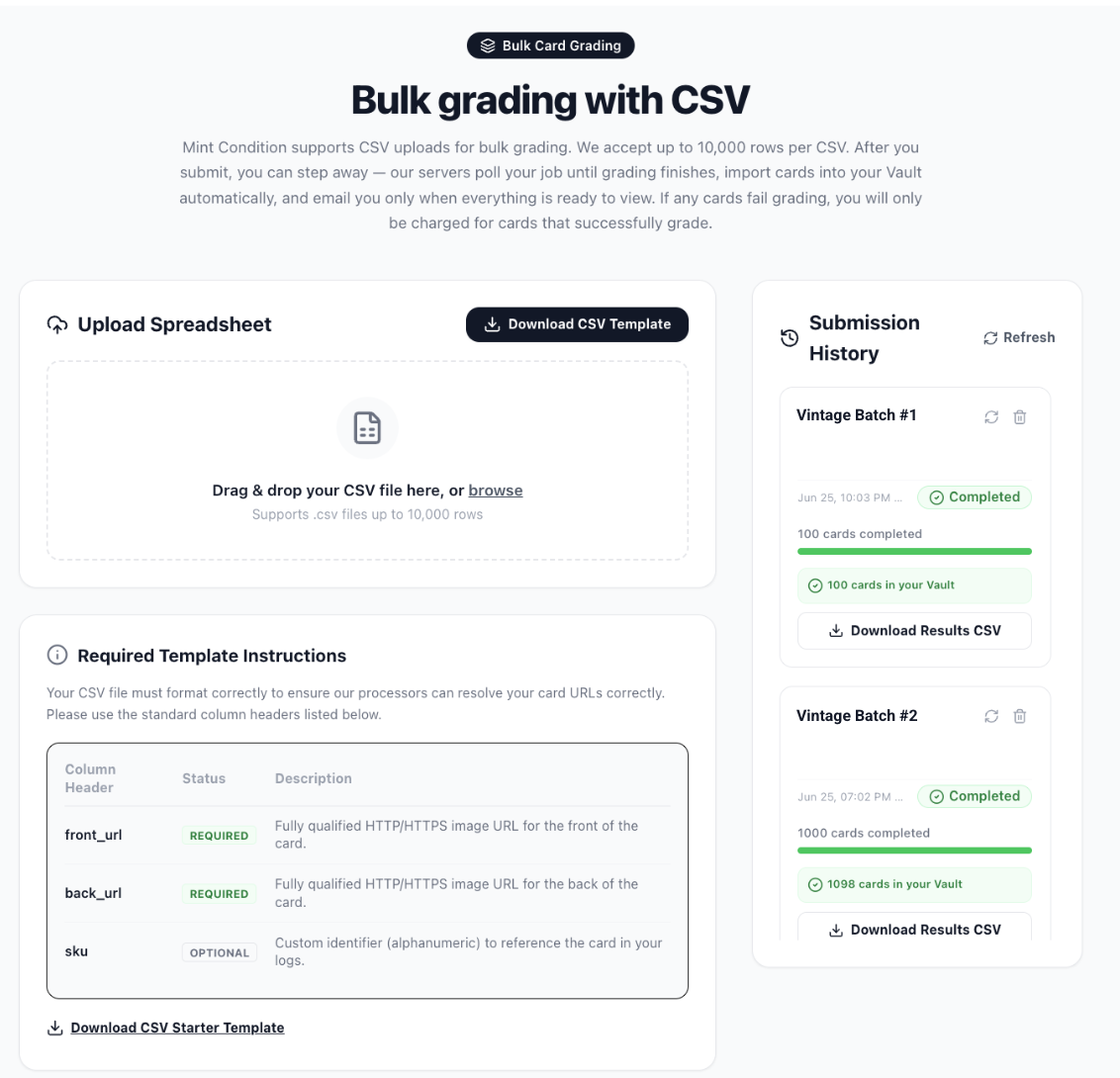
If the buy is big (hundreds or thousands of images, or you already have front/back URLs), use bulk CSV. That’s the path built for volume. Upload the sheet, let it run, get emailed when it’s done, and only pay for cards that grade successfully.
If you’re sorting a smaller submit pile the same night, run a batch (up to 20 at a time) so you can decide before you pack for PSA.
Either way:
- Start with submit candidates, not the whole tote.
- Get front and back photos (or URLs) for every card you’re still considering.
- Compare the estimate to your shop’s minimum submit grade and your comps.
Dealers who wait until “next week” usually over-submit. Memory is kind to the card you paid up for on the floor.
What to decide in under a minute per card
Use the pre-grade as a filter, not a long debate:
Centering and eye appeal
If centering alone sinks the card below your submit threshold, move it to raw keepers. Don’t hope the grader “sees it differently” on a common modern.
Surface and corners
Show lighting hides print lines, scuffs, and soft corners. A consistent pass catches stuff your eyes skipped on card forty of the night.
Comp reality
A strong estimate on a card nobody wants is still a bad submit. Pair the grade estimate with what a slab of that card actually sells for, not what you wish it sold for.
A show-weekend workflow that scales
| When | Action |
|---|---|
| At the table | Buy with a submit threshold in mind (what grade is worth the fee for this card) |
| Same night / next morning | Bulk CSV for the big lots; batch for a small hot pile |
| After results | Vault notes on keepers so your team isn’t re-deciding from a tote of sleeves |
| PSA prep | Only export or pack cards that still clear your margin |
If you regularly buy in volume, bulk should be the default intake path. Batch is the quick tool when you need answers on a short list right now.
Pre-grading is not official grading
AI pre-grading is an estimate. It helps you prioritize submissions and cut waste. It is not a PSA, BGS, or SGC grade.
Use it to shrink the submit pile. Don’t promise customers an official grade from a pre-grade.
Start with one purchase
If show triage is new for your shop:
- Pick one buy from this weekend.
- Run it through bulk (or a batch if it’s a short list).
- Count how many cards move to raw keepers after the estimate.
Most dealers find a real chunk of the “submit later” pile should never leave the shop.
Buying in volume? Try bulk CSV, or run a quick batch. New here? Try the sandbox with sample cards.